By JO BECKER
This article was reported by Jo Becker, Richard Siklos, Jane Perlez and Raymond Bonner, and written by Ms. Becker.
In the fall of 2003, a piece of Rupert Murdoch’s sprawling media empire was in jeopardy.
Congress was on the verge of limiting any company from owning local television stations that reached more than 35 percent of American homes. Mr. Murdoch’s Fox stations reached nearly 39 percent, meaning he would have to sell some.
A strike force of Mr. Murdoch’s lobbyists joined other media companies in working on the issue. The White House backed the industry, and in a late-night meeting just before Thanksgiving, Congressional leaders agreed to raise the limit — to 39 percent.
One leader of the Congressional movement to limit ownership was Senator Trent Lott, Republican of Mississippi. But in the end, he, too, agreed to the compromise. It turns out he had a business connection to Mr. Murdoch. Months before, HarperCollins, Mr. Murdoch’s publishing house, had signed a $250,000 book deal to publish Mr. Lott’s memoir, “Herding Cats,” records and interviews show.
An aide to Mr. Lott said the book deal had no bearing on the senator’s decision, and a spokesman for Mr. Murdoch chalked it up to coincidence. Still, the ownership fight showcases the confluence of business, political and media prowess that is central to the way Mr. Murdoch has built his global information conglomerate.
His vast media holdings give him a gamut of tools — not just campaign contributions, but also jobs for former government officials and media exposure that promotes allies while attacking adversaries, sometimes viciously — all of which he has used to further his financial interests and establish his legitimacy in the United States, interviews and government records show.
Mr. Murdoch may be best known in the this country as the man who created Fox News as a counterweight to what he saw as a liberal bias in the news media. But he has often set aside his conservative ideology in pursuit of his business interests. In recent years, he has spread campaign contributions across both sides of the political aisle and nurtured relationships with the likes of Bill and Hillary Clinton.
More than 30 years after the Australian-born Mr. Murdoch arrived on the American newspaper scene and turned The New York Post into a racy, right-leaning tabloid, his holding company, the News Corporation, has offered $5 billion to buy a pillar of the business news establishment — Dow Jones, parent company of The Wall Street Journal.
The sale would give Mr. Murdoch control of the pre-eminent journalistic authority on the world in which he is an active, aggressive participant. What worries his critics is that Mr. Murdoch will use The Journal, which has won many Pulitzer Prizes and has a sterling reputation for accuracy and fairness, as yet another tool to further his myriad financial and political agendas.
“It is hard to imagine Rupert Murdoch publishing The New York Post in Midtown Manhattan, with all of his personal and political biases and business interests reflected every day, while publishing The Wall Street Journal in Downtown Manhattan with no interference whatsoever,” James Ottaway Jr., a 5 percent shareholder and former director of Dow Jones, said recently.
Members of the Bancroft family, which controls Dow Jones, have sought elaborate assurances from Mr. Murdoch that he will preserve the independence of The Journal’s news coverage. Last night, advisers to both sides said they were close to reaching an agreement on editorial control, but it was unclear whether the Bancrofts would approve a deal. When he bought The Times of London in 1981 he gave similar assurances, but some former editors say he meddled with news operations anyway.
Mr. Murdoch declined a request for an interview, but has recently said he would preserve The Journal’s independence. Gary L. Ginsberg, a News Corporation executive, said it was “insulting” for anyone to suggest that Mr. Murdoch would compromise the integrity of “one of the world’s great newspapers” adding, “It’s not good business and it’s not good politics and it’s absurd on its face.”
From his beginnings as a proprietor of a single Australian newspaper, Mr. Murdoch now commands a news, entertainment and Internet enterprise whose $68 billion value slightly exceeds that of the Walt Disney Company.
The American newspaper industry has never seen a publisher quite like him. Mr. Murdoch has long been a pivotal figure in England and Australia, and in the dozen years since he has moved his base of operations to this country, he has insinuated himself into the political and financial fabric of the United States. His businesses have thrived in a highly regulated environment in part because of his remarkable ability to mold the rules to fit his needs.
This became clear in the regulatory fight over media ownership, a battle critical to Mr. Murdoch’s audacious creation of a fourth national television network, Fox. He has also turned his political clout on business rivals, as he did when he mounted a campaign recently against the Nielsen television rating agency.
“Rupert is sort of an 18th-century guy: the world is still forming, and he’s going to do what he can to hack out a place in the wilderness and defend it,” said Richard D. Parsons, the chairman of Time Warner, who both competes and socializes with Mr. Murdoch.
Political Relations
Shortly before Christmas in 1987, Senator Edward M. Kennedy taught Mr. Murdoch a tough lesson in the ways of Washington.
Two years earlier, Mr. Murdoch had paid $2 billion to buy seven television stations in major American markets with the intention of starting a national network. To comply with rules limiting foreign ownership, he became an American citizen. And to comply with rules banning the ownership of television stations and newspapers in the same market, he promised to sell some newspapers eventually. But almost immediately he began looking for ways around that rule.
Then Mr. Kennedy, Democrat of Massachusetts, stepped in. Mr. Kennedy’s liberal politics had made him a target of Murdoch-owned news media outlets, particularly The Boston Herald, which often referred to Mr. Kennedy as “Fat Boy.” He engineered a legislative maneuver that forced an infuriated Mr. Murdoch to sell his beloved New York Post.
Mr. Murdoch was able to buy back the tabloid five years later, but the sale represented a rare and, some say, transforming defeat.
“Teddy almost did him in,” said Philip R. Verveer, a cable television lobbyist. “I presume that over time, as his media ownership in this country has grown and grown, he’s realized that you can’t throw spit wads at leading figures in society with impunity.”
In fact, among the ranks of the lobbyists who have done Mr. Murdoch’s bidding in Washington in recent years is Anthony Podesta, Mr. Kennedy’s former counsel.
Over time, Mr. Murdoch has shown an ability to adapt to changing political winds. In Britain, his newspapers had a long history of being pro-Tory and anti-Labor, and he was personally close with former Prime Minister Margaret Thatcher. But in 1997, two of Mr. Murdoch’s papers endorsed Tony Blair for prime minister. Mr. Murdoch became a frequent guest at No. 10 Downing Street, “effectively a member of Blair’s cabinet,” said Lance Price, who was a Blair spokesman from 1998 to 2001.
Mr. Murdoch had reason to court Mr. Blair: ensuring that the new government would allow him to keep intact his British holdings, which by then included The Times of London, multiple tabloids and a stake in Sky News. Many in the Labor Party under Mr. Blair favored the enactment of media ownership limits, which could have forced Mr. Murdoch to divest some of his interests. But Mr. Blair “quietly dropped the policy,” Mr. Price said.
“Blair’s attitude was quite clear,” Andrew Neil, the editor of The Sunday Times under Mr. Murdoch in London from 1983 to 1994, said in an interview. “If the Murdoch press gave the Blair government a fair hearing, it would be left intact.”
Mr. Murdoch’s trajectory in the United States has been similar. His credentials as a purveyor of conservative journalism notwithstanding, he operates like many less visible corporate executives in not allowing his personal politics to get in the way of his bottom line.
An analysis of campaign finance records shows that since 1997, Republicans have received only a slight majority — 56 percent — of the $4.76 million in campaign donations from the Murdoch family and the News Corporation’s political action committees and employees. Since Democrats won control of Congress in the 2006 elections, the company and its employees have given more than twice as much to Democrats as to Republicans, the records show.
“We did seek more balance,” said Peggy Binzel, Mr. Murdoch’s former chief in-house lobbyist. “You need to be able to tell your story to both sides to be effective. And that’s what political giving is about.”
Mr. Murdoch has an army of outside lobbyists, who have reported being paid more than $11 million since 1998 to address issues as diverse as trade relations, programming decency and Internet regulation.
One firm focuses almost exclusively on parts of the tax code that affect the News Corporation. By taking advantage of a provision in the law that allows expanding companies like Mr. Murdoch’s to defer taxes to future years, the News Corporation paid no federal taxes in two of the last four years, and in the other two it paid only a fraction of what it otherwise would have owed. During that time, Securities and Exchange Commission records show, the News Corporation’s domestic pretax profits topped $9.4 billion.
The News Corporation’s outside lobbying team has been a veritable political Noah’s ark. It has included Republicans like Ed Gillespie, former Republican Party chairman; former Senator Alfonse M. D’Amato of New York; and the firm headed by former Mayor Rudolph W. Giuliani of New York. But it has also included former Democratic members of Congress, as well as several high-ranking Clinton administration officials, including Jack Quinn, former White House counsel.
Mr. Murdoch’s association with the Clintons is perhaps the best example of his ever-morphing relationships with the powerful, and theirs with him. For years, the former president was a favorite target of The New York Post, which seemed to delight in referring to him as “former horndog-in-chief.”
In October 2002, Mr. Clinton and Mr. Murdoch had a lunch meeting at Mr. Clinton’s office in Harlem. It was arranged by Mr. Ginsberg, who had worked in the White House counsel’s office in the Clinton administration and is now the News Corporation’s executive vice president for corporate affairs.
More recently, Mr. Murdoch donated $500,000 to the former president’s Global Initiative and was one of its featured panelists at a 2005 event in New York. In 2006, The Post issued a surprising endorsement of Mrs. Clinton in her Senate re-election bid. On June 5 and 6 of this year, Mr. Ginsberg and Peter A. Chernin, president and chief operating officer of the News Corporation, were hosts of back-to-back fund-raisers for Mrs. Clinton’s presidential campaign, one in New York and one in Los Angeles.
The Nielsen Battle
In early 2004, an alarm went off at the News Corporation headquarters.
Nielsen Media Research was preparing to switch to a more sophisticated technology to calculate ratings that television stations use to set advertising rates for local programming. Results of a trial run showed sharp drops in ratings for shows carried on stations owned by the News Corporation, particularly those aimed at minority viewers.
With millions of dollars at stake, Mr. Murdoch sprang into action. He hired the Glover Park Group, a consulting firm with deep ties to the Clinton administration, to run a grass-roots ground war. Charging that the system was faulty and that it undercounted minorities, the firm started an extensive advertising campaign intended to delay the rollout of the new technology and staged protests around the country that drew such unlikely allies as the Rev. Al Sharpton. Among the Democrats who wrote to Nielsen opposing the new system was Mrs. Clinton.
The New York Post pursued the story, running news headlines like “Nailing Nielsen” and routinely failing to mention its parent company’s interest in the outcome.
The resulting two-year campaign was unusually brazen, even by Beltway standards. Protesters massed outside Nielsen offices in New York. The atmosphere grew so charged that Nielsen’s chief, Susan Whiting, hired a personal bodyguard and the company strengthened security at its headquarters, according to Nielsen officials.
At one point, Ms. Whiting publicly accused Mr. Chernin and Mr. Murdoch’s son Lachlan of threatening to do “everything possible to discredit you and the company in Washington” if she did not back down. Mr. Chernin and Mr. Murdoch publicly denied making the threat.
But the News Corporation turned to Republican allies to put pressure on Nielsen. Senator Conrad Burns, a Montana Republican who was chairman of the Commerce Committee’s communications subcommittee, and Representative Vito J. Fossella, a New York Republican, introduced legislation that threatened Nielsen with government oversight.
One day after the bill was introduced, The New York Post ran an opinion article co-written by Mr. Fossella expressing outrage over plans for a museum at ground zero in Lower Manhattan. A news report in the paper that day raised the same concerns. Mr. Ginsberg said “the notion that Rupert had anything to do with that is laughable.”
Political contributions flowed to nearly all the legislation’s supporters. In 2005, the year the legislation was introduced, records show that the bill’s 29 sponsors and co-sponsors together received at least $144,650 in donations from the News Corporation’s political action committees and lobbyists.
Ultimately, the dispute was settled quietly. Mr. Murdoch succeeded in keeping the old rating system in place for several months in the three top markets, New York, Chicago and Los Angeles. Those months included the sweeps period, when advertising rates are set.
Mr. Ginsberg said the campaign was successful in highlighting concerns about tracking minority viewership and “educating certain groups as to how to use this new technology.”
But Dale Snape, who lobbied for Nielsen, said: “It was a classic example of him using all his resources to try to politically influence an outcome — he bought a Hill debate. It was scorched earth, and it was all about money. They created a public interest furor where there was none.”
Media Ownership Rules
For more than 70 years, the federal government has regulated media ownership to protect against any entity gaining too much power over the dissemination of information. And for much of the last two decades, Mr. Murdoch has chafed against those restrictions, winning exceptions and easing regulations.
Again and again, Mr. Murdoch won crucial skirmishes with the Federal Communications Commission. In this he was helped most by his Republican allies, including former Speaker Newt Gingrich and the Bush administration, which has promoted measures to allow more consolidation.
During the Clinton administration, Mr. Murdoch was able to draw upon Republican support when the F.C.C. chairman at the time, Reed E. Hundt, opened an investigation into whether the News Corporation had violated commission rules in acquiring television stations to form the Fox Network.
According to two former F.C.C. officials, Mr. Murdoch’s chief in-house lobbyist at the time, Preston Padden, confronted Mr. Hundt’s chief of staff at a meeting at a coffee shop near the agency’s headquarters. Mr. Hundt would not be able to “get a job as dog-catcher” if the F.C.C. took away a single News Corporation television license, Mr. Padden warned, they said.
The warning, one of the officials said, “was designed to send a harsh signal that if we continued, they would do everything in the world to make our life miserable.” As Mr. Hundt later recalled in a memoir, Mr. Murdoch assailed him in an op-ed article in The Wall Street Journal, and Congressional Republicans rose up against him.
In the end, the F.C.C. found that the deal had violated the rules. But Mr. Hundt declined to strip Mr. Murdoch of his licenses, reasoning that the fault lay with the Reagan-era F.C.C. for approving the acquisitions in the first place. Mr. Padden, who has left the News Corporation, refused requests for an interview.
It was the first of many victories for Mr. Murdoch in the new political climate that swept into Washington in 1994 when the Republicans won control of Congress. It was a fortunate time for Mr. Murdoch, whose business interests and political ideology were in ascendancy.
The new Congress overhauled telecommunications laws for the first time in decades, allowing media companies like Mr. Murdoch’s to expand by increasing the share of the national audience they could reach. So long as a company did not reach more than 35 percent of American households, it could buy as many stations as it wanted.
Mr. Murdoch’s lobbyists were also able to get a provision in the bill requiring the F.C.C. to review the cap periodically. It was just such a review that led the Bush administration to increase the cap again in 2003. By then, Mr. Murdoch had bought additional stations that put him over the 35 percent limit, as had another company, Viacom.
The F.C.C. chairman at that time, Michael K. Powell, proposed a broad loosening of media ownership rules, including raising the cap to 45 percent. (Two of Mr. Powell’s top advisers, Susan Eid and Paul Jackson, now work for Mr. Murdoch.)
Ultimately, a federal appeals court threw out the new rules. But by then, Congress and the White House had intervened, passing into law the 39 percent compromise.
Mr. Lott, an outspoken critic of media consolidation, agreed to the increase because it was still lower than what Mr. Powell had proposed, said his spokesman, Nick Simpson. Mr. Simpson added that Mr. Lott did not want to force companies to sell stations and that his book deal did not affect his view of Mr. Murdoch’s legislative agenda.
Many companies publish books by public officials. But because of Mr. Murdoch’s wide business interests, HarperCollins’s book deals have at times drawn scrutiny. Its decision to cancel a book critical of Chinese Communist leaders by Hong Kong’s last British governor was assailed as a move by Mr. Murdoch to protect his Chinese business interests, a charge he denied.
HarperCollins also provoked a firestorm when it gave Mr. Gingrich a $4.5 million book contract as Congress was preparing to redraw the media ownership rules.
Mr. Ginsberg pointed out that Mr. Murdoch later fired the Gingrich book’s editor for making what he regarded as an “uneconomical and unseemly” deal. He said that in general Mr. Murdoch did not involve himself in decisions about book contracts, and added, “If these books aren’t viable, they aren’t published.”
Mr. Lott’s book sold 12,000 copies, according to Nielsen Bookscan, which tracks about 70 percent of all domestic retail and Internet sales. Senator Arlen Specter, Republican of Pennsylvania, received $24,506 from HarperCollins for his modest-selling book “Passion for Truth,” according to financial disclosure forms. Senator Kay Bailey Hutchison, Republican of Texas, got $141,666 for her book “American Heroines,” which has sold better. All sit on either the Commerce or Judiciary Committees that most closely oversee the media business.
HarperCollins has also given book deals to Senator Chuck Hagel, Republican of Nebraska, and a $1 million advance to Justice Clarence Thomas of the Supreme Court, both of whose books are due out next year.
A former HarperCollins executive, granted anonymity to speak candidly about the company, said Mr. Murdoch was less hands-on than people assumed. “It’s not done in a direct way where he issues instructions,” the executive said. “It’s a bunch of people running around trying to please him.”
Ms. Binzel, the former chief government strategist for the News Corporation, said Mr. Murdoch got the breaks he did in the United States based on the merits, not his political connections. He took on the major networks and created more competition in the media marketplace, something regulators had long desired, she said.
“Rupert has always been a visionary, and when you bring in a visionary, they are frequently going up against the establishment,” she said. “So much of what Rupert has faced in Washington has been getting rid of rules that protect incumbents. The reason he convinced people to do that was that he was going to be providing something new.”
The Dow Jones Bid
Now, Mr. Murdoch is trying to convince the Bancroft family to sell him The Journal.
Dow Jones has proposed a committee to safeguard the paper’s editorial independence that includes a continuing role for some members of the Bancroft family and current Journal editors and executives.
Mr. Murdoch has said he prefers the model of committee used at The Times of London. His company bought The Times in 1981 and in order to win approval for the deal Mr. Murdoch agreed to an independent oversight committee and guidelines intended to prevent him from meddling in coverage.
According to interviews with former Times editors and affidavits filed in an unrelated 1995 libel suit, there were clashes over the publisher’s involvement in the paper from the very start.
Harry Evans, who was editor at the time of Mr. Murdoch’s acquisition and was forced out soon after, wrote a memoir vividly describing his constant fights with the new publisher. In his affidavit, Mr. Evans describes Mr. Murdoch’s ordering the publication of a cartoon that Times editors had deemed tasteless and his complaining that too many stories had a left-wing bent. Another former editor said Mr. Murdoch once pointed to the byline of a correspondent and asserted, “That man’s a Commie.”
Fred Emery, another former Times editor, said Mr. Murdoch once said to him: “I give instructions to my editors all around the world; why shouldn’t I in London?”
The turmoil of those first years subsided, in part, one former Times editor said, because Mr. Murdoch got rid of those who did not adhere to his politics. “He puts people in who will do his bidding,” said Mr. Neil, the former editor.
The current editor of The Times, Robert Thomson, paints a different picture: “I’ve had absolutely no interference and a lot of investment in a loss-making newspaper, for which Rupert Murdoch gets no credit.”
Under Mr. Thomson, the business pages of The Times expanded, and there are now 18 foreign reporters, compared with 8 when he came to the paper. The Times is the only British newspaper with a Baghdad bureau.
Mr. Thomson, who is expected to play an important role at The Journal if the News Corporation buys it, said Mr. Murdoch would invest in the paper and expand overseas coverage.
Over the years, as Mr. Murdoch built his empire, he has lusted after The Journal.
In the mid-1980s, he attended a black-tie press dinner in New York and found himself sitting next to Julie Salamon, then The Journal’s film critic and a former New York Times reporter. She vividly recalls his fascination with the inner workings of the newspaper and said he clearly expressed his desire to own it someday.
Ms. Salamon initially dismissed Mr. Murdoch. “The idea of this tabloid guy buying The Journal, which was then at the zenith of its success, seemed preposterous,” she said.
But by the end of the meal, impressed by Mr. Murdoch’s canny sense of the American media landscape, Ms. Salamon said, “I went home with a funny feeling in the pit of my stomach, like this guy might actually do it.”
Jo Becker and Richard Siklos reported from New York, Jane Perlez and Raymond Bonner from London. Griff Palmer contributed from New York.
Monday, June 25, 2007

U.S. Economy: Existing Home Sales Approach Lowest in Four Years
By Shobhana Chandra
June 25 (Bloomberg) -- Sales of previously owned homes in the U.S. fell in May to the lowest level in almost four years, reinforcing concerns about a protracted housing slump.
Purchases declined 0.3 percent to an annual rate of 5.99 million, from a revised 6.01 million the prior month, the National Association of Realtors said today in Washington. The supply of unsold homes jumped to a record.
The housing recession, the worst since 1991, is the biggest threat to an economy that's otherwise showing signs of recovering from a yearlong slowdown. A growing number of homes on the market and higher interest rates may further discourage buyers, economists say.
``The slow bleed in housing continues,'' said Ethan Harris, chief U.S. economist at Lehman Brothers Holdings Inc. in New York. ``The inventory adjustment is going to be slow and painful. This means we're in for more pressure on prices and more pressure on construction.''
Treasury notes remained higher after the report, with the yield on the benchmark 10-year note retreating about 4 basis points to 5.09 percent at 10:51 a.m. in New York. The dollar was little changed, while stocks advanced.
Resales were forecast to fall 0.3 percent to a 5.97 million annual rate from a previously reported 5.99 million in April, according to the median forecast of 61 economists in a Bloomberg News survey.
``We're expecting a continued drag on the economy from housing throughout this year,'' said Jonathan Basile, an economist at Credit Suisse Holdings in New York.
Closing
Monthly figures on home resales are compiled from contract closings and may reflect sales agreed upon weeks or months earlier, while new-home sales are recorded when a contract is signed. Sales of existing homes account for about 85 percent of the U.S. housing market, and new-home sales make up the rest.
New-home sales will be released tomorrow and may show a decline for May after jumping in April by the most in 14 years, according to the median forecast in a Bloomberg survey.
Rising defaults among subprime mortgage borrowers, people with poor or scant credit histories, are hampering a recovery in housing. At the same time, mortgage rates near an 11-month high make borrowing more expensive, even for those with good credit.
The number of Americans who may lose their homes because of late mortgage payments rose to a record in the first quarter, the Mortgage Bankers Association said this month. Subprime loans going into default rose to a five-year high, and prime loans entering foreclosure also surged to a record.
Unsold Homes
The supply of homes for sale increased 5 percent to 4.43 million, the most ever. At the current sales pace, that represented 8.9 months' worth, the highest since June 1992 and up from 8.4 months' worth at the end of the prior month.
The median price of an existing home fell 2.1 percent last month from a year ago to $223,700, the 10th consecutive month of year-over-year declines, the Realtors group said.
Resales of single-family homes fell 0.8 percent to an annual rate of 5.2 million. Sales of condos and co-ops rose 2.6 percent to a 790,000 rate.
Purchases fell 3.4 percent in the South and 0.8 percent in the West. They rose 5.8 percent in the Northeast and 0.7 percent in the Midwest.
The housing slowdown ``now appears likely to remain a drag on economic growth for somewhat longer than previously expected,'' Fed Chairman Ben S. Bernanke said at a conference in Cape Town, South Africa, this month.
Bernanke's Outlook
Still, Bernanke projects a ``moderate'' pace of growth for the economy given the housing recession isn't spilling over much into other parts of the economy.
``The housing market is likely to find a bottom some time this year and no longer be a drag on top-line growth,'' Fed Bank of Richmond President Jeffrey Lacker said in a speech in Frederick, Maryland, on June 6.
Builders continue to struggle. Rising interest rates and surging delinquencies pushed down confidence among homebuilders this month to the lowest since February 1991, the National Association of Home Builders/Wells Fargo index showed last week.
Hovnanian Enterprises Inc., New Jersey's largest homebuilder, said the spring home-selling season was marred by rising cancellations in April and slow sales that continued into May.
``The nationwide housing market is quite sluggish,'' Ara Hovnanian, chief executive officer of Hovnanian Enterprises Inc. in Red Bank, New Jersey, said in an interview June 18. ``It's likely to stay a challenging environment for a little while.''
Builders broke ground on fewer new houses in May, while an increase in building permits pointed to a better outlook for future construction, the Commerce Department reported June 19.
Housing accounts for about 23 percent of the U.S. economy, when taking into account purchases of furniture, appliances and items for new homes, according to the Joint Center for Housing Studies at Harvard University in Cambridge, Massachusetts.
June 25 (Bloomberg) -- Sales of previously owned homes in the U.S. fell in May to the lowest level in almost four years, reinforcing concerns about a protracted housing slump.
Purchases declined 0.3 percent to an annual rate of 5.99 million, from a revised 6.01 million the prior month, the National Association of Realtors said today in Washington. The supply of unsold homes jumped to a record.
The housing recession, the worst since 1991, is the biggest threat to an economy that's otherwise showing signs of recovering from a yearlong slowdown. A growing number of homes on the market and higher interest rates may further discourage buyers, economists say.
``The slow bleed in housing continues,'' said Ethan Harris, chief U.S. economist at Lehman Brothers Holdings Inc. in New York. ``The inventory adjustment is going to be slow and painful. This means we're in for more pressure on prices and more pressure on construction.''
Treasury notes remained higher after the report, with the yield on the benchmark 10-year note retreating about 4 basis points to 5.09 percent at 10:51 a.m. in New York. The dollar was little changed, while stocks advanced.
Resales were forecast to fall 0.3 percent to a 5.97 million annual rate from a previously reported 5.99 million in April, according to the median forecast of 61 economists in a Bloomberg News survey.
``We're expecting a continued drag on the economy from housing throughout this year,'' said Jonathan Basile, an economist at Credit Suisse Holdings in New York.
Closing
Monthly figures on home resales are compiled from contract closings and may reflect sales agreed upon weeks or months earlier, while new-home sales are recorded when a contract is signed. Sales of existing homes account for about 85 percent of the U.S. housing market, and new-home sales make up the rest.
New-home sales will be released tomorrow and may show a decline for May after jumping in April by the most in 14 years, according to the median forecast in a Bloomberg survey.
Rising defaults among subprime mortgage borrowers, people with poor or scant credit histories, are hampering a recovery in housing. At the same time, mortgage rates near an 11-month high make borrowing more expensive, even for those with good credit.
The number of Americans who may lose their homes because of late mortgage payments rose to a record in the first quarter, the Mortgage Bankers Association said this month. Subprime loans going into default rose to a five-year high, and prime loans entering foreclosure also surged to a record.
Unsold Homes
The supply of homes for sale increased 5 percent to 4.43 million, the most ever. At the current sales pace, that represented 8.9 months' worth, the highest since June 1992 and up from 8.4 months' worth at the end of the prior month.
The median price of an existing home fell 2.1 percent last month from a year ago to $223,700, the 10th consecutive month of year-over-year declines, the Realtors group said.
Resales of single-family homes fell 0.8 percent to an annual rate of 5.2 million. Sales of condos and co-ops rose 2.6 percent to a 790,000 rate.
Purchases fell 3.4 percent in the South and 0.8 percent in the West. They rose 5.8 percent in the Northeast and 0.7 percent in the Midwest.
The housing slowdown ``now appears likely to remain a drag on economic growth for somewhat longer than previously expected,'' Fed Chairman Ben S. Bernanke said at a conference in Cape Town, South Africa, this month.
Bernanke's Outlook
Still, Bernanke projects a ``moderate'' pace of growth for the economy given the housing recession isn't spilling over much into other parts of the economy.
``The housing market is likely to find a bottom some time this year and no longer be a drag on top-line growth,'' Fed Bank of Richmond President Jeffrey Lacker said in a speech in Frederick, Maryland, on June 6.
Builders continue to struggle. Rising interest rates and surging delinquencies pushed down confidence among homebuilders this month to the lowest since February 1991, the National Association of Home Builders/Wells Fargo index showed last week.
Hovnanian Enterprises Inc., New Jersey's largest homebuilder, said the spring home-selling season was marred by rising cancellations in April and slow sales that continued into May.
``The nationwide housing market is quite sluggish,'' Ara Hovnanian, chief executive officer of Hovnanian Enterprises Inc. in Red Bank, New Jersey, said in an interview June 18. ``It's likely to stay a challenging environment for a little while.''
Builders broke ground on fewer new houses in May, while an increase in building permits pointed to a better outlook for future construction, the Commerce Department reported June 19.
Housing accounts for about 23 percent of the U.S. economy, when taking into account purchases of furniture, appliances and items for new homes, according to the Joint Center for Housing Studies at Harvard University in Cambridge, Massachusetts.
Friday, June 22, 2007
Brazil says global trade deal still possible, but 'G4' dead
AFX News Limited
GENEVA (Thomson Financial) - A global trade deal is still possible, despite the collapse of the talks in Potsdam yesterday between four key players over differences on agriculture, Brazil's foreign minister and top trade official said today. 'I don't think that the Doha Round is dead, even though it is agonising,' Brazilian Foreign Minister Celso Amorim told reporters in Geneva.
By contrast, the failure of the talks in Potsdam does spell the end of the so-called 'G4' group, he said, after Brazil and India walked out of the talks with the EU and the US. 'The G4 as such is dead,' Amorim said bluntly. Still, it is 'difficult but not impossible' for all 150 members of the WTO to arrive at a comprehensive global trade deal, he added.Amorim and Indian Commerce Minister Kamal Nath walked out of the G4 talks yesterday, after Western governments failed to meet their demands to cut agriculture subsidies, which developing countries say prevent their farmers from competing on world markets. Meanwhile, the EU and US representatives accused the two emerging nations of refusing to budge on reducing import tariffs on industrial goods.
GENEVA (Thomson Financial) - A global trade deal is still possible, despite the collapse of the talks in Potsdam yesterday between four key players over differences on agriculture, Brazil's foreign minister and top trade official said today. 'I don't think that the Doha Round is dead, even though it is agonising,' Brazilian Foreign Minister Celso Amorim told reporters in Geneva.
By contrast, the failure of the talks in Potsdam does spell the end of the so-called 'G4' group, he said, after Brazil and India walked out of the talks with the EU and the US. 'The G4 as such is dead,' Amorim said bluntly. Still, it is 'difficult but not impossible' for all 150 members of the WTO to arrive at a comprehensive global trade deal, he added.Amorim and Indian Commerce Minister Kamal Nath walked out of the G4 talks yesterday, after Western governments failed to meet their demands to cut agriculture subsidies, which developing countries say prevent their farmers from competing on world markets. Meanwhile, the EU and US representatives accused the two emerging nations of refusing to budge on reducing import tariffs on industrial goods.
Thursday, June 21, 2007
H&R Block, Hurt by Mortgages, Posts $86 Million Loss
By Yalman Onaran
June 21 (Bloomberg) -- H&R Block Inc., the largest U.S. tax preparer, posted a fiscal fourth-quarter loss after reducing the value of its unprofitable mortgage unit and forecasting that profit for 2008 will be less than some analysts estimated.
Net loss for the quarter ended April 30 was $85.6 million, or 26 cents a share, compared with a profit of $588 million, or $1.77, a year earlier, Kansas City, Missouri-based H&R Block said today in a statement. Profit excluding the mortgage unit was $591 million, or $1.81 a share, missing the $1.88 average estimate of seven analysts compiled by Bloomberg.
Chief Executive Officer Mark Ernst, who's been trying to stem the defection of customers to rival tax preparers, agreed in April to sell Option One Mortgage Corp. to hedge-fund manager Cerberus Capital Management LP. While Cerberus may pay as much as $800 million, the final price is tied to Option One's performance until the sale is completed, which may take until October. For now, the writedown has forced Ernst to postpone a stock buyback.
``The Option One story is the dominant issue at H&R Block until the deal is completed,'' said Scott Schneeberger, an analyst at CIBC World Markets Inc. in New York who has a ``sector perform'' rating on the stock.
Shares of H&R Block fell 74 cents, or 3.3 percent, to $22.04 at 4:21 p.m. in New York Stock Exchange composite trading. They've lost 4.3 percent this year.
Subprime Lending
The mortgage unit posted a net loss of $677 million in the fourth quarter, the company said. That included pretax losses of $389 million for bad loans and $517 million of impairment charges taken before the sale of the unit.
The unit's losses were worse than expected, strengthening the possibility of the sale price falling ``at low end of our $400-800 million target range,'' said UBS AG analyst Kelly Flynn in a note to investors. The good news, Flynn said, is that the sale to Cerberus ``is on track and should close by Oct. 31.''
Option One, based in Irvine, California, was the eighth- biggest purveyor in the U.S. last year of subprime mortgages, offered to people with the worst credit records. Such loans typically default about six times more often than conventional mortgages. H&R Block had already written down about $250 million linked to bad home loans before the sale to Cerberus was announced as U.S. defaults hit four-year highs.
Cerberus knew the mortgage market faced turmoil in the fiscal fourth quarter and understood the impact on Option One as the sale was being negotiated, Ernst said.
Sale Affirmed
``There's nothing in these numbers that would affect our ability to close'' the transaction, Ernst said in a conference call with analysts.
Revenue from continuing operations, which excludes Option One, rose 8 percent to $2.4 billion, the company said. Clients served at H&R Block offices nationwide increased 0.9 percent during the fiscal year, the company said today.
For the full year, H&R Block lost $433.7 million, or $1.33 a share, compared with a profit of $490.4 million, or $1.47 a share, in fiscal 2006. Revenue rose 12.5 percent to $4.02 billion.
The company said it aims to earn $1.25 to $1.45 a share in fiscal 2008 from continuing operations, compared with $1.47 in a Bloomberg survey of eight analysts. Discontinued operations will post ``modest losses'' in the first two quarters. ``We are intent on aggressively managing our operations for better performance,'' Ernst said in the statement.
H&R Block won't be able to buy back any shares until the fiscal fourth quarter of 2008 because charges tied to Option One depleted its capital, Chief Financial Officer Bill Trubeck said. The company had promised to use about $700 million from the sale to buy back shares.
The charges mean H&R Block's capital has fallen below regulatory requirements, Trubeck said. The firm is negotiating with the Treasury's Office of Thrift Supervision on capital requirements and expects the
Luxottica sees sales up to 5.7 bln euros with Oakley
By Marie-Louise Gumuchian
MILAN, June 21 (Reuters) - Italian luxury eyewear group Luxottica expects its acquisition of U.S. sunglasses maker Oakley to lift sales to 5.7 billion euros ($7.64 billion) this year, Luxottica said on Thursday.
The leading eyewear maker, whose brands include RayBan and Prada, is to buy the U.S. company in an all-cash deal worth about $2.1 billion.
The deal lets Luxottica expand into sports and activewear glasses. The combined company will have 6,000 stores across Asia, Europe and North America, according to a company presentation on the deal.
Luxottica had sales of 4.68 billion euros in 2006. The 2007 revenue projection includes a forecast for Luxottica net sales of 5 billion euros.
"We are combining two strengths, we are combining two leaders," Chief Executive Andrea Guerra told a conference call.
"We are not looking to have one pure Luxottica, but we are getting wider, we are getting more diversity, more power, more energy to the business."
News of the deal -- announced overnight -- sent shares of both companies up. Luxottica hit a record high of 28.48 euros.
The Italian firm is to buy all the outstanding shares of Oakley for $29.30 each.
OLYMPICS OPPORTUNITY
Luxottica, which has a presence in Asia, will provide Oakley with new business opportunities, such as the 2008 Olympic Games in Beijing, Oakley Chief Executive Scott Olivet said.
"We would have a difficult time, with no infrastructure and no resources, taking full advantage of that opportunity," he said.
Luxottica is aiming for a 2007 core profit, after the deal, of 1.2 billion euros, and targets a net debt-to-EBITDA ratio of 2.3 times. It expects net debt to be between 2.7 billion and 2.8 billion euros, depending on exchange rates.
It expects the deal -- which is seen closing in the second half of the year -- to lead to operating synergies of about 100 million euros over the next three years.
Guerra said he did not expect any regulatory hurdles.
Luxottica Chairman and founder Leonardo Del Vecchio owns almost 70 percent of the company.
Oakley, based in Foothill Ranch, California, has been scaling back its apparel and footwear lines while beefing up its optics portfolio. This year it bought Eyewear Safety Systems, a company that supplies protective eyewear to the military, law enforcement and firefighters.
Last year, it bought luxury brand Oliver Peoples and retail chain The Optical Shop of Aspen, while launching a women's optical line.
Olivet said Oakley would not pay out a dividend this year. (Additional reporting by Rachel Sanderson)
MILAN, June 21 (Reuters) - Italian luxury eyewear group Luxottica
The leading eyewear maker, whose brands include RayBan and Prada, is to buy the U.S. company in an all-cash deal worth about $2.1 billion.
The deal lets Luxottica expand into sports and activewear glasses. The combined company will have 6,000 stores across Asia, Europe and North America, according to a company presentation on the deal.
Luxottica had sales of 4.68 billion euros in 2006. The 2007 revenue projection includes a forecast for Luxottica net sales of 5 billion euros.
"We are combining two strengths, we are combining two leaders," Chief Executive Andrea Guerra told a conference call.
"We are not looking to have one pure Luxottica, but we are getting wider, we are getting more diversity, more power, more energy to the business."
News of the deal -- announced overnight -- sent shares of both companies up. Luxottica hit a record high of 28.48 euros.
The Italian firm is to buy all the outstanding shares of Oakley for $29.30 each.
OLYMPICS OPPORTUNITY
Luxottica, which has a presence in Asia, will provide Oakley with new business opportunities, such as the 2008 Olympic Games in Beijing, Oakley Chief Executive Scott Olivet said.
"We would have a difficult time, with no infrastructure and no resources, taking full advantage of that opportunity," he said.
Luxottica is aiming for a 2007 core profit, after the deal, of 1.2 billion euros, and targets a net debt-to-EBITDA ratio of 2.3 times. It expects net debt to be between 2.7 billion and 2.8 billion euros, depending on exchange rates.
It expects the deal -- which is seen closing in the second half of the year -- to lead to operating synergies of about 100 million euros over the next three years.
Guerra said he did not expect any regulatory hurdles.
Luxottica Chairman and founder Leonardo Del Vecchio owns almost 70 percent of the company.
Oakley, based in Foothill Ranch, California, has been scaling back its apparel and footwear lines while beefing up its optics portfolio. This year it bought Eyewear Safety Systems, a company that supplies protective eyewear to the military, law enforcement and firefighters.
Last year, it bought luxury brand Oliver Peoples and retail chain The Optical Shop of Aspen, while launching a women's optical line.
Olivet said Oakley would not pay out a dividend this year. (Additional reporting by Rachel Sanderson)
Wednesday, June 20, 2007
Nuveen Agrees to $5.7 Billion Sale to LBO Firm Madison Dearborn
By Jason Kelly and Sree Vidya Bhaktavatsalam (Bloomberg)
June 20 (Bloomberg) -- Nuveen Investments Inc., the largest U.S. closed-end fund company, agreed to be acquired by Madison Dearborn Partners LLC for $5.75 billion in the biggest leveraged buyout in the asset-management industry.
Madison Dearborn will pay $65 a share in cash for Nuveen, 20 percent more than the stock's closing price yesterday. The Chicago-based money management firm said its board hired Goldman Sachs Group Inc. to solicit higher bids for the next month.
Nuveen, which dates back to 1898, oversees $166 billion for clients, including $53 billion in funds with publicly traded shares. LBO firms bought Commerzbank AG's Jupiter fund unit and London-based Gartmore Investment Management Plc since the start of 2006 because the companies provide steady revenue to cover the debt used to finance the buyouts.
``What really attracts private-equity firms is that asset- management firms throw out so much cash,'' said Ben Phillips, managing director of New York-based investment bank Putnam Lovell NBF Securities. ``Nuveen has very high asset margins.''
TA Associates, a Boston-based buyout firm, agreed in March to acquire London-based Jupiter from Commerzbank for 740 million pounds ($1.48 billion). Last year, San Francisco-based Hellman & Friedman LLC purchased Gartmore.
Public-market investors prize fund managers, too, because they produce more consistent profits than brokerage and securities firms. Before today's buyout agreement, Nuveen shares traded at about 22 times earnings. That compared with less than 11 for New York-based Goldman, though it lagged behind the average of about 30 times for the five-member Standard and Poor's Midcap Asset Management & Custody Banks Index.
Offer Too Low?
James Ellman, whose investment firm Seacliff Capital owns Nuveen shares, said the offer from Madison Dearborn is too low.
``We think that the deal could have easily been worth 40 percent more,'' Ellman said in a telephone interview from his office in San Francisco.
The buyout would create ``an opportunity to accelerate our current strategic initiatives,'' said John Amboian, 46, who will become chief executive officer of Nuveen next month, on a conference call with analysts. Timothy Schwertfeger, 58, who has been CEO since 1996, will remain chairman of Nuveen's fund board.
Unlike typical mutual funds, closed-end funds raise a fixed amount of money in public offerings and are traded throughout the day on stock exchanges.
``Closed-end funds would be one of the pillars for a buyer,'' said Jeffrey Ptak, an analyst at Morningstar Inc. in Chicago. ``They are not subject to the gyrations of the market, and assets aren't going to run away at the first sign of trouble.''
Shares Gain
Nuveen reported April 30 that first-quarter net income rose 17 percent and sales gained 23 percent, as institutions doubled their deposits with the company. The company has expanded by offering mutual funds and separately managed accounts for wealthy individuals and institutions. Closed-end funds made up 32 percent of Nuveen's assets, down from 36 percent a year earlier.
Shares of Nuveen rose $9.04 to $63.20 at 12:50 p.m. in composite trading on the New York Stock Exchange. They had gained 4.4 percent so far this year, beating the 3 percent advance in the 61-member Standard and Poor's Midcap Financials Index.
Madison Dearborn's current $6.5 billion fund is the fifth it has raised since the Chicago-based firm was founded in 1992 by ex-First Chicago Corp. executives. Last month, Madison Dearborn offered to buy computer reseller CDW Corp. for about $7.3 billion, the biggest acquisition it has attempted on its own.
PeopleFirst, PayPal
The firm, which oversees more than $14 billion in private- equity funds, also participated in the $11.3 billion buyout of Univision Communications Inc. in March.
Madison Dearborn's current financial-services investments include Pax Holding Corp., a securities clearing firm based in Chicago. Previously, it owned PayPal Inc., the online payments network; CapitalSource Inc., a commercial-finance company that now trades on the New York Stock Exchange; and PeopleFirst Inc., an auto lender sold to Capital One Financial Corp. in 2001, according to the firm's Web site.
In the Nuveen deal, Madison Dearborn will assume $550 million of debt, bringing the total transaction value to $6.3 billion.
The special committee of Nuveen's board that considered the buyout was advised by Goldman and Katten Muchin Rosenman LLP. Goldman and Sandler O'Neill & Partners LP provided fairness opinions. Nuveen got legal advice from Cravath, Swaine & Moore LLP and Winston & Strawn LLP.
Madison Dearborn hired Merrill Lynch & Co. and Kirkland & Ellis LLP.
June 20 (Bloomberg) -- Nuveen Investments Inc., the largest U.S. closed-end fund company, agreed to be acquired by Madison Dearborn Partners LLC for $5.75 billion in the biggest leveraged buyout in the asset-management industry.
Madison Dearborn will pay $65 a share in cash for Nuveen, 20 percent more than the stock's closing price yesterday. The Chicago-based money management firm said its board hired Goldman Sachs Group Inc. to solicit higher bids for the next month.
Nuveen, which dates back to 1898, oversees $166 billion for clients, including $53 billion in funds with publicly traded shares. LBO firms bought Commerzbank AG's Jupiter fund unit and London-based Gartmore Investment Management Plc since the start of 2006 because the companies provide steady revenue to cover the debt used to finance the buyouts.
``What really attracts private-equity firms is that asset- management firms throw out so much cash,'' said Ben Phillips, managing director of New York-based investment bank Putnam Lovell NBF Securities. ``Nuveen has very high asset margins.''
TA Associates, a Boston-based buyout firm, agreed in March to acquire London-based Jupiter from Commerzbank for 740 million pounds ($1.48 billion). Last year, San Francisco-based Hellman & Friedman LLC purchased Gartmore.
Public-market investors prize fund managers, too, because they produce more consistent profits than brokerage and securities firms. Before today's buyout agreement, Nuveen shares traded at about 22 times earnings. That compared with less than 11 for New York-based Goldman, though it lagged behind the average of about 30 times for the five-member Standard and Poor's Midcap Asset Management & Custody Banks Index.
Offer Too Low?
James Ellman, whose investment firm Seacliff Capital owns Nuveen shares, said the offer from Madison Dearborn is too low.
``We think that the deal could have easily been worth 40 percent more,'' Ellman said in a telephone interview from his office in San Francisco.
The buyout would create ``an opportunity to accelerate our current strategic initiatives,'' said John Amboian, 46, who will become chief executive officer of Nuveen next month, on a conference call with analysts. Timothy Schwertfeger, 58, who has been CEO since 1996, will remain chairman of Nuveen's fund board.
Unlike typical mutual funds, closed-end funds raise a fixed amount of money in public offerings and are traded throughout the day on stock exchanges.
``Closed-end funds would be one of the pillars for a buyer,'' said Jeffrey Ptak, an analyst at Morningstar Inc. in Chicago. ``They are not subject to the gyrations of the market, and assets aren't going to run away at the first sign of trouble.''
Shares Gain
Nuveen reported April 30 that first-quarter net income rose 17 percent and sales gained 23 percent, as institutions doubled their deposits with the company. The company has expanded by offering mutual funds and separately managed accounts for wealthy individuals and institutions. Closed-end funds made up 32 percent of Nuveen's assets, down from 36 percent a year earlier.
Shares of Nuveen rose $9.04 to $63.20 at 12:50 p.m. in composite trading on the New York Stock Exchange. They had gained 4.4 percent so far this year, beating the 3 percent advance in the 61-member Standard and Poor's Midcap Financials Index.
Madison Dearborn's current $6.5 billion fund is the fifth it has raised since the Chicago-based firm was founded in 1992 by ex-First Chicago Corp. executives. Last month, Madison Dearborn offered to buy computer reseller CDW Corp. for about $7.3 billion, the biggest acquisition it has attempted on its own.
PeopleFirst, PayPal
The firm, which oversees more than $14 billion in private- equity funds, also participated in the $11.3 billion buyout of Univision Communications Inc. in March.
Madison Dearborn's current financial-services investments include Pax Holding Corp., a securities clearing firm based in Chicago. Previously, it owned PayPal Inc., the online payments network; CapitalSource Inc., a commercial-finance company that now trades on the New York Stock Exchange; and PeopleFirst Inc., an auto lender sold to Capital One Financial Corp. in 2001, according to the firm's Web site.
In the Nuveen deal, Madison Dearborn will assume $550 million of debt, bringing the total transaction value to $6.3 billion.
The special committee of Nuveen's board that considered the buyout was advised by Goldman and Katten Muchin Rosenman LLP. Goldman and Sandler O'Neill & Partners LP provided fairness opinions. Nuveen got legal advice from Cravath, Swaine & Moore LLP and Winston & Strawn LLP.
Madison Dearborn hired Merrill Lynch & Co. and Kirkland & Ellis LLP.
Murdoch Dangles MySpace in Yahoo's Face
By Keith Regan
E-Commerce Times
Part of the ECT News Network
Rupert Murdoch wants to exchange MySpace for a stake in Yahoo. The News Corp. head has been searching for ways to expand the company's online exposure; meanwhile, the search giant has been looking for an opportunity to become a player in the social networking universe. Murdoch purchased MySpace for $580 million in 2005.
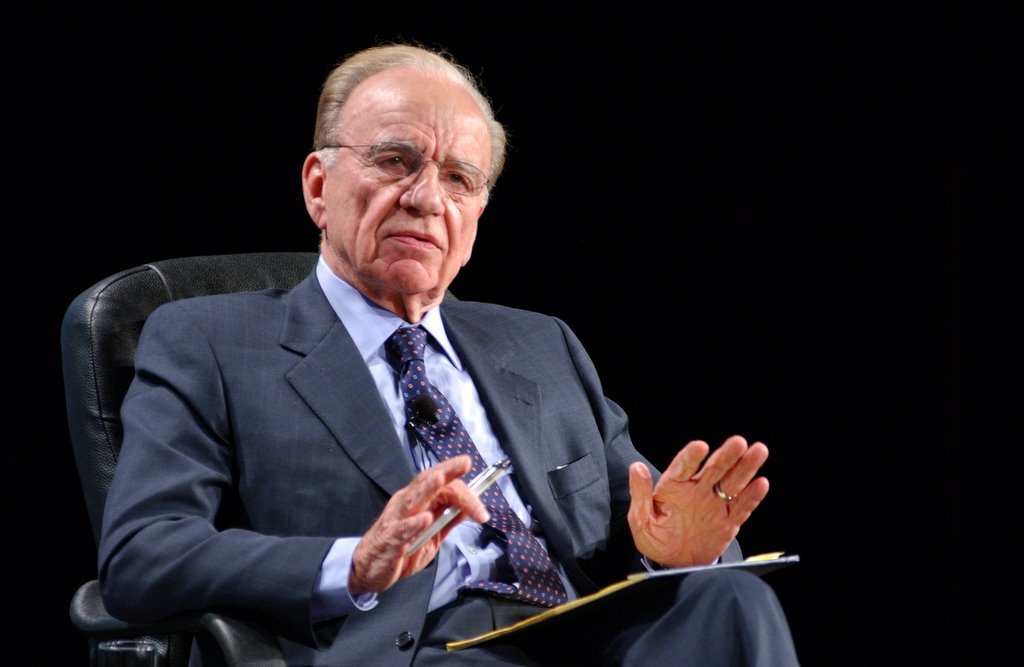
News Corp. honcho Rupert Murdoch has offered to swap the wildly popular social networking site MySpace in exchange for a stake in portal-in-flux Yahoo. Murdoch reportedly approached Yahoo with the offer of giving the portal ownership of MySpace in exchange for a 30 percent ownership stake of the combined Yahoo-MySpace.
On the surface, the deal seems to address needs of both parties: Murdoch has been looking for ways to expand his media company's online exposure, which in turn will create more opportunities for extending the reach of his traditional media brands; meanwhile, Yahoo has been eager to find the right social networking play, kicking the tires at length on Facebook last year, but reportedly was unable to close a US$1 billion purchase of that site.
Growth in Value
Murdoch bought MySpace in 2005 for $580 million, but since then the value of the site has grown significantly, as it has racked up more users and as marketers have invested in finding ways to leverage social networking to gain exposure for their products.
In fact, the founder of MySpace has said the site was worth as much as 100 times the purchase price. At current stock prices, Yahoo is worth around $37 billion.
The Times of London first reported the proposed swap in its Wednesday editions. Although talks could falter, they are ongoing between the two media companies, the paper noted.
The Google Effect
The gambit comes as Murdoch is in the midst of another takeover drama of his own: His $5 billion bid for Wall Street Journal parent company Dow Jones is still being mulled by the family that controls the majority of the company's stock and other suitors are mulling offers.
Murdoch's News Corp. owns newspapers on three continents, including his native Australia, as well as the Fox channels, movie studios and cable interests.
Meanwhile, it's no secret that Murdoch has designs on being a major online player as well. In 2005, he bought the online gaming network IGN for $650 million and his MySpace buy was seen as a watershed move that underscored the importance of social networking.
Murdoch tried to buy YouTube before Google (Nasdaq: GOOG) purchased the online video site. Afterward, the mogul continued to roll up Internet companies, buying online photo sharing site Photobucket in May for a reported $250 million.
Impact of the Shakeup
It's not clear what impact the recent shakeup at Yahoo may have on the proposed deal.
Yahoo CEO Terry Semel resigned on Monday, with cofounder Jerry Yang taking the CEO role. On Wednesday, Yahoo announced partnerships with a number of Asia-based mobile carriers to offer the portal's mobile search tool, but Yang may need to be aggressive and innovative to satisfy shareholders restless about the company's No. 2 position in the search advertising market behind Google.
Yahoo shares were up 1.6 percent in late morning trading Wednesday to $28.08. News Corp. stock was up just under 1 percent to $23.90.
Dressing Up for a Sale?
The changes at Yahoo this week were aimed at both appeasing restless shareholders tired of seeing Google rack up market share, stock price gains and key acquisitions, Enderle Group Principal Analyst Rob Enderle told the E-Commerce Times. Some of those shareholders are likely interested in a more dramatic move, however, including a sale or the spinning off of some noncore assets.
In recent months, Yahoo has been linked to Microsoft (Nasdaq: MSFT) repeatedly, with the two sides said to have discussed everything from a partnership to an outright sale of Yahoo to Microsoft. Such a move would create a far more formidable competitor for Google, Enderle noted.
While the arrival of News Corp. on the scene may prompt Microsoft to take another run at the portal, the cultural fit between those two companies may make for rocky times, he added. "Microsoft has a very unique and specific culture that would make an integration as large as Yahoo difficult," Enderle said. "Yahoo's culture is unique as well, but more in the way of Internet companies, which have been acquired successfully in the past."
Constant Flux
Yahoo, meanwhile, would likely be tempted by the dangling of MySpace. Its efforts to acquire Facebook were widely seen as recognition that its own networking gambits -- such as photo-sharing site Flickr and Web site tagging tool Del.icio.us -- did not represent a large enough footprint in the social networking arena.
Murdoch, meanwhile, may have done as much to cement the idea that social networking had business applications -- and therefore could be profitable -- as anyone in the Internet space, said Outsell Vice President Chuck Richard.
"Murdoch doesn't buy companies because they're cool, he buys them to make money, so when he put a flag in the ground with the MySpace purchase, it really changed the tone of the conversation around these sites," Richard told the E-Commerce Times.
Still, the social networking space has been seen as one in constant flux, with Facebook and other rivals posing a risk and corporate ownership of MySpace seen threatening its status as a cool place to hang out online, he added.
E-Commerce Times
Part of the ECT News Network
Rupert Murdoch wants to exchange MySpace for a stake in Yahoo. The News Corp. head has been searching for ways to expand the company's online exposure; meanwhile, the search giant has been looking for an opportunity to become a player in the social networking universe. Murdoch purchased MySpace for $580 million in 2005.
News Corp. honcho Rupert Murdoch has offered to swap the wildly popular social networking site MySpace in exchange for a stake in portal-in-flux Yahoo. Murdoch reportedly approached Yahoo with the offer of giving the portal ownership of MySpace in exchange for a 30 percent ownership stake of the combined Yahoo-MySpace.
On the surface, the deal seems to address needs of both parties: Murdoch has been looking for ways to expand his media company's online exposure, which in turn will create more opportunities for extending the reach of his traditional media brands; meanwhile, Yahoo has been eager to find the right social networking play, kicking the tires at length on Facebook last year, but reportedly was unable to close a US$1 billion purchase of that site.
Growth in Value
Murdoch bought MySpace in 2005 for $580 million, but since then the value of the site has grown significantly, as it has racked up more users and as marketers have invested in finding ways to leverage social networking to gain exposure for their products.
In fact, the founder of MySpace has said the site was worth as much as 100 times the purchase price. At current stock prices, Yahoo is worth around $37 billion.
The Times of London first reported the proposed swap in its Wednesday editions. Although talks could falter, they are ongoing between the two media companies, the paper noted.
The Google Effect
The gambit comes as Murdoch is in the midst of another takeover drama of his own: His $5 billion bid for Wall Street Journal parent company Dow Jones is still being mulled by the family that controls the majority of the company's stock and other suitors are mulling offers.
Murdoch's News Corp. owns newspapers on three continents, including his native Australia, as well as the Fox channels, movie studios and cable interests.
Meanwhile, it's no secret that Murdoch has designs on being a major online player as well. In 2005, he bought the online gaming network IGN for $650 million and his MySpace buy was seen as a watershed move that underscored the importance of social networking.
Murdoch tried to buy YouTube before Google (Nasdaq: GOOG) purchased the online video site. Afterward, the mogul continued to roll up Internet companies, buying online photo sharing site Photobucket in May for a reported $250 million.
Impact of the Shakeup
It's not clear what impact the recent shakeup at Yahoo may have on the proposed deal.
Yahoo CEO Terry Semel resigned on Monday, with cofounder Jerry Yang taking the CEO role. On Wednesday, Yahoo announced partnerships with a number of Asia-based mobile carriers to offer the portal's mobile search tool, but Yang may need to be aggressive and innovative to satisfy shareholders restless about the company's No. 2 position in the search advertising market behind Google.
Yahoo shares were up 1.6 percent in late morning trading Wednesday to $28.08. News Corp. stock was up just under 1 percent to $23.90.
Dressing Up for a Sale?
The changes at Yahoo this week were aimed at both appeasing restless shareholders tired of seeing Google rack up market share, stock price gains and key acquisitions, Enderle Group Principal Analyst Rob Enderle told the E-Commerce Times. Some of those shareholders are likely interested in a more dramatic move, however, including a sale or the spinning off of some noncore assets.
In recent months, Yahoo has been linked to Microsoft (Nasdaq: MSFT) repeatedly, with the two sides said to have discussed everything from a partnership to an outright sale of Yahoo to Microsoft. Such a move would create a far more formidable competitor for Google, Enderle noted.
While the arrival of News Corp. on the scene may prompt Microsoft to take another run at the portal, the cultural fit between those two companies may make for rocky times, he added. "Microsoft has a very unique and specific culture that would make an integration as large as Yahoo difficult," Enderle said. "Yahoo's culture is unique as well, but more in the way of Internet companies, which have been acquired successfully in the past."
Constant Flux
Yahoo, meanwhile, would likely be tempted by the dangling of MySpace. Its efforts to acquire Facebook were widely seen as recognition that its own networking gambits -- such as photo-sharing site Flickr and Web site tagging tool Del.icio.us -- did not represent a large enough footprint in the social networking arena.
Murdoch, meanwhile, may have done as much to cement the idea that social networking had business applications -- and therefore could be profitable -- as anyone in the Internet space, said Outsell Vice President Chuck Richard.
"Murdoch doesn't buy companies because they're cool, he buys them to make money, so when he put a flag in the ground with the MySpace purchase, it really changed the tone of the conversation around these sites," Richard told the E-Commerce Times.
Still, the social networking space has been seen as one in constant flux, with Facebook and other rivals posing a risk and corporate ownership of MySpace seen threatening its status as a cool place to hang out online, he added.
Subscribe to:
Posts (Atom)